Multi Camera Synchronization in High-Speed Systems: A Technical Guide
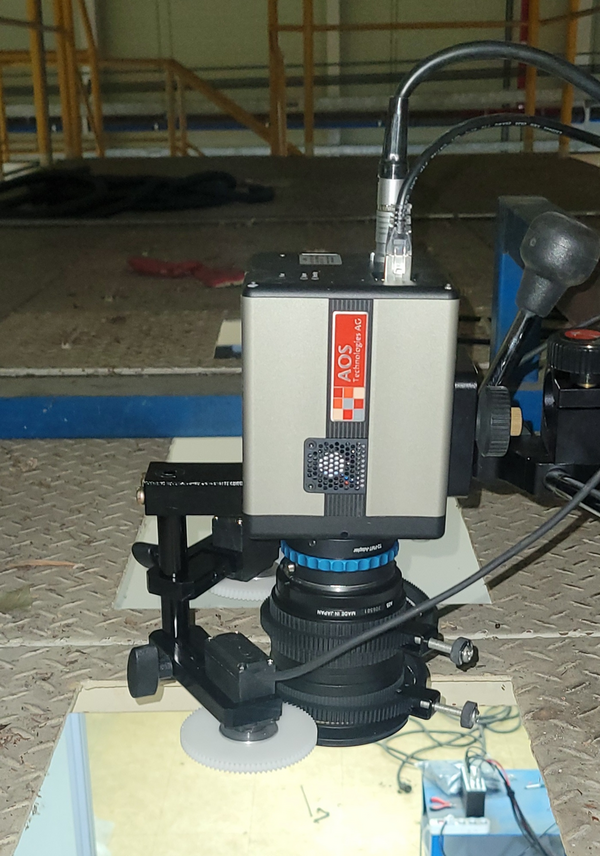
In Automotive crash testing and Defense ballistics often rely on multi-camera setups running in frame synchronization. In a setup using multiple cameras, a small temporal mismatch renders 3D motion capture data useless. Without hardware-based multi-camera synchronization, correlating high-speed footage from different cameras results in faulty results. The costly acquired image data with these multi-camera systems become a useless base for further analysis.
Setups for multi-camera synchronization rely on proper and rigid signaling accuracy required for proper accurate 3D Motion Analysis. This guide defines the necessary architecture to ensure correct synchronization in multiple camera systems with the required accuracy.
Prevent data loss due to synchronization errors. Do not risk your test results with generic setups.
The Hidden Challenges of Multi-Camera Synchronization in Automotive and Defense Testing
Anyone can connect multiple cameras. Keeping them perfectly synchronized under extreme conditions is where real engineering begins.
In automotive crash testing, sled testing, and defense or airborne applications, stringent sync of measurement devices is a must. High-speed cameras must capture events simultaneously, frame by frame, to provide engineers with accurate data for motion analysis. If even one camera loses synchronization, valuable information can be lost - and in many cases, the test cannot simply be repeated.
Synchronization Is More Than Just a Cable
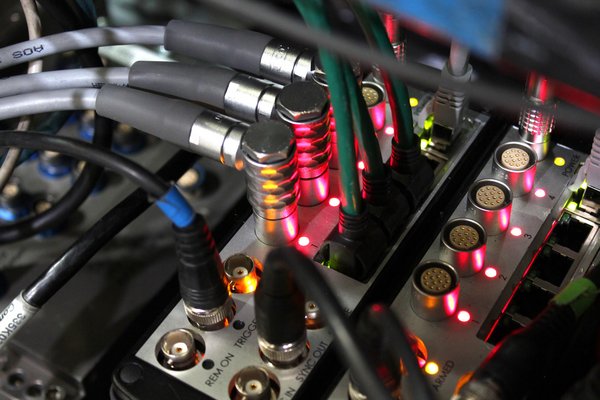
Reliable multi-camera systems require far more than connecting cameras with synchronization cables. During crash tests, the electrical environment can become extremely noisy. Strong electromagnetic interference (EMI), high currents, and switching transients can disrupt synchronization signals including trigger signals if the system is not designed for these demanding conditions.
The solution starts with high-quality, shielded cabling, but the real difference lies in the electronics. Robust synchronization hardware, intelligent master-slave architecture, and EMI-resistant circuit design ensure that every connected camera continues to operate in perfect phase lock throughout the entire recording.
Built to Survive the Impact
Automotive crash tests expose equipment to extreme shock loads and vibration. Every component - not only the cameras, but also synchronization switches, connectors, and cables - must withstand these forces without interruption.
Missing even a single frame during a crash test can mean losing critical engineering data. That's why reliability is not just desirable - it's essential.
Airborne Applications Raise the Bar Even Higher
Operating high-speed cameras onboard aircraft introduces additional challenges. Besides vibration and shock, systems must cope with wide temperature ranges, electrical interference, and stringent aerospace reliability requirements.
Maintaining precise synchronization under these conditions demands equipment specifically designed for airborne operation. Rugged hardware, reliable communication, and proven synchronization technology are key to successful data acquisition.
Decades of Experience in Demanding Applications
For decades, AOS Technologies has been developing high-speed imaging solutions for some of the world's most demanding environments. Our synchronization systems are trusted in automotive safety development, onboard crash testing, aerospace programs, and defense applications, where precision and reliability are non-negotiable.
From compact standalone systems to complex multi-camera installations, AOS provides synchronized imaging solutions engineered to perform when failure is simply not an option. We care about your images.
Because in high-speed testing, perfect synchronization is not a feature - it is the foundation of accurate measurement.
Camera Synchronization over Ethernet – The Benefits of Precision Time Protocol (PTP)
A shock hardened camera architecture relies on a chassis machined from solid milled aluminum, fundamentally differing from die-cast metal or plastic composites found in standard equipment. This unibody construction minimizes mechanical resonance frequencies that cause sensor alignment errors.
In ruggedized cameras like the AOS VIT series, the housing functions as a conductive thermal sink for internal electronics, eliminating the need for structural vents. This thermal management system is explicitly engineered to dissipate heat in static environments lacking airflow, ensuring reliability during pre-test phases in confined vehicle cavities. This enables performance in an ultra-compact form factor (approx. 80 x 80 x 80 mm), allowing integration into extremely tight test setups.
To withstand high g-forces (150G standard, 200G+ peak) , the internal PCB stack uses epoxy encapsulation (potting). This immobilizes components, preventing solder joint fatigue and maintaining battery or capacitor connectivity during impact. Mechanical rigidity is critical for video quality and for data validity.
System logic utilizes an integrated g-sensor measuring acceleration vectors across all axes. Users set specific g-force thresholds to trigger the transition from buffer to permanent storage. This makes the unit a highly capable camera for extreme conditions, ensuring the recording is secured based on physical forces rather than manual input.
Synchronizing multiple high-speed cameras has traditionally required dedicated synchronization wiring between every camera in the system. While this approach is proven and reliable, modern networking technologies now offer an attractive alternative.
Simplifying Multi-Camera Installations
Precision Time Protocol (PTP - IEEE 1588) is a network-based synchronization protocol that enables compatible devices to share an extremely accurate common time reference. Instead of distributing synchronization signals through dedicated cables, the timing information is transmitted over the Ethernet network itself.
For high-speed camera systems, this means that cameras can operate in perfect synchronization without additional synchronization wiring - provided the network infrastructure is designed to distribute the PTP signal accurately and without interruption.
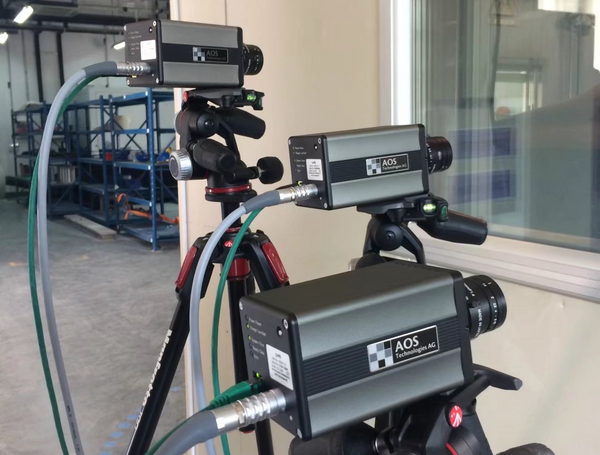
The result is a cleaner installation, reduced cabling, and greater flexibility when deploying multi-camera systems.
Simplifying Multi-Camera Installations
PTP synchronization is particularly attractive for laboratory environments, production facilities, and test setups where Ethernet networking already exists. Fewer cables not only reduce installation time but also make camera positioning easier and improve system scalability as additional cameras are added.
Of course, successful PTP synchronization depends on the quality of the network. Switches and other network components must support precise timing to ensure that synchronization accuracy is maintained across all connected devices.
AOS VIT Cameras are PTP Ready
The AOS VIT series of high-speed cameras fully supports Precision Time Protocol synchronization. Cameras can seamlessly lock onto the network's PTP master clock, allowing multiple cameras to capture events in perfect synchronization over a standard Ethernet network.
To make operation even easier, the AOS Imaging Studio software continuously monitors the PTP status and clearly indicates whether each camera is successfully synchronized and locked to the network time reference. This gives users immediate confidence that every camera is ready before recording begins.
The Best of Both Worlds
Whether your application requires traditional hardware synchronization for the harshest environments or the flexibility of software-based PTP synchronization, AOS offers both solutions. Our high-speed camera systems are designed to deliver precise time stamped sequences, reliable performance, and simplified system integration - giving you the freedom to choose the synchronization method that best fits your application.
Less cabling. Greater flexibility. Precise synchronization. That's the power of PTP with AOS high-speed cameras.
Conclusion: A Flexible Synchronization Concept Delivers Reliable Results
Reliable high-speed camera synchronization starts with careful system planning and the right combination of proven components and technologies. Whether you're conducting automotive crash tests, airborne store separation trials, or complex industrial measurements, partnering with experienced engineers ensures that every instrument works together seamlessly.
While software-based synchronization methods such as PTP offer excellent flexibility for many applications, dedicated hardware synchronization remains the preferred solution for the most demanding environments. A physically connected synchronization network provides maximum reliability, robust immunity to electromagnetic interference, and precise frame alignment—ensuring that every camera captures the exact same moment.
Choosing the right synchronization concept is ultimately about selecting the solution that best matches your application. With decades of experience in high-speed imaging and multi-camera systems, AOS Technologies helps customers design synchronization solutions that deliver accurate, reliable, and repeatable results - every time.
Need a turnkey high-speed solution? Get in touch with our system engineers to define the right setup for your application.